











Marrying a Ukrainian dentist sounds, at first, like a very practical match. She is educated, careful with details, used to working with people, and trained in a profession that is respected almost everywhere. Dentistry is not easy work. It takes steady hands, patience, discipline, and the ability to stay calm while someone else is nervous, uncomfortable, or in pain.
But if your Ukrainian girlfriend or future wife plans to move abroad after marriage, her career may not continue as smoothly as you expect.
A woman can be a qualified dentist in Ukraine and still not be allowed to work as a dentist immediately in the USA, Canada, or the UK. Her diploma still matters. Her experience still matters. But dentistry is a licensed healthcare profession. Each country has its own rules for who can examine patients, diagnose dental problems, perform treatment, and use the title “dentist.”
Marriage may help her move, settle, or receive work permission in a general sense. It does not give her a dental license.
That difference can affect your plans as a couple. It can affect income, timelines, emotional stress, and the kind of support she may need while rebuilding her career in a new country.
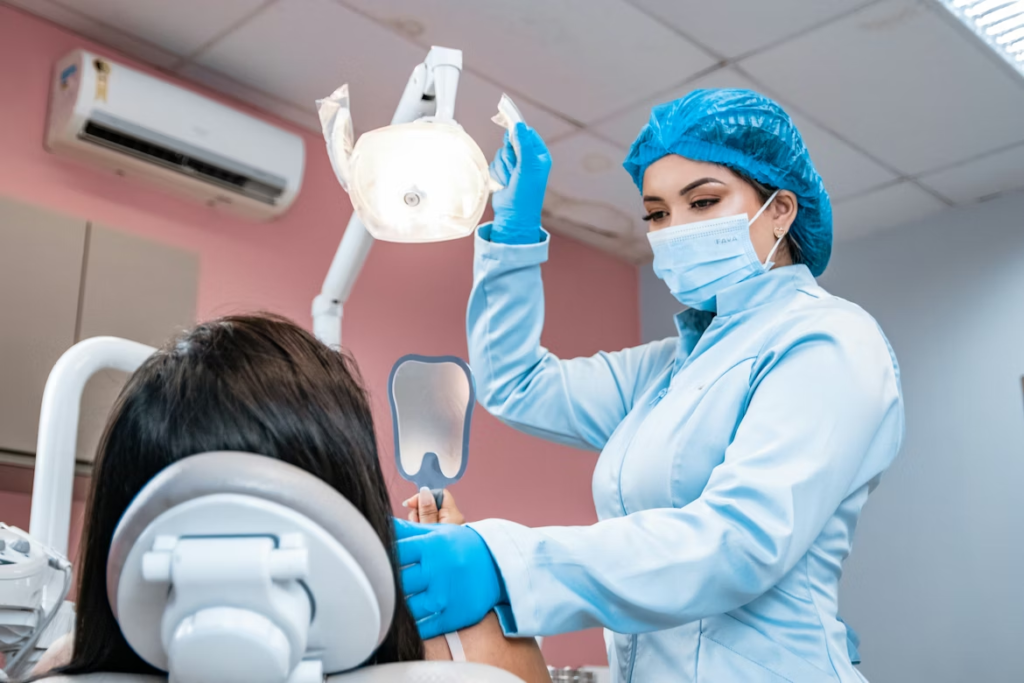
Why This Question Matters If Your Girlfriend Is a Ukrainian Dentist
For many women, dentistry is not just a job. It is a professional identity. If your girlfriend worked as a dentist in Ukraine, she may have had patients who trusted her, colleagues who respected her, and a daily routine built around her skills.
Then she moves abroad.
Suddenly, she may need to explain her diploma, translate documents, prove her education, study for exams, improve professional English, and accept that she cannot work in the same role right away. That can be hard to take. Not because she lacks talent, but because the profession is tightly controlled in most countries.
For a relationship, this is not a small issue. If she cannot work as a dentist at first, she may earn less than expected. She may need money for exams, courses, applications, and document preparation. She may need time to study. She may feel that the status she had in Ukraine has been put on hold.
A serious partner should understand this before marriage, not after frustration appears.
The better question is not, “Is her Ukrainian dental diploma useless abroad?” It is not useless. The better question is: what does she need to do before she can legally practice dentistry in the country where you plan to live?
Does Marriage Allow Her to Work as a Dentist Automatically?
No. Marriage does not automatically allow her to work as a dentist.
Marriage may help with immigration. Depending on the country, it may support a spouse visa, residence status, permanent residence, or work authorization. But a work permit is not the same thing as a dental license.
She may have the legal right to live in the country. She may even have the right to work in many jobs. Still, she cannot simply start treating dental patients if she is not registered or licensed under the rules of that country.
This is where many couples get confused. They think: “If she can work, she can work as a dentist.” Regulated healthcare professions do not work that way.
Dentistry involves patient safety, infection control, diagnosis, X-rays, anesthesia, prescriptions, surgical procedures, medical history, and legal responsibility. Because of that, local dental boards or regulators decide who can practice.
A marriage certificate does not replace that process.
Can a Ukrainian Dental Diploma Be Recognized Abroad?
A Ukrainian dental diploma can usually be used as the starting point for a licensing process, but it rarely gives direct permission to practice.
Most countries will want to see official documents. These may include her dental diploma, academic transcript, clinical training records, internship documents, proof of professional registration in Ukraine, certificates of good standing, work experience letters, passport, and marriage certificate if her name changed.
The documents may need Apostille, legalization, certified translation, or verification. In some cases, the dental school itself may need to send documents directly to a regulator or evaluation body.
Recognition can mean different things. A country may recognize that her diploma is real and that she completed dental education. That does not always mean she can work as a dentist. She may still need exams, local clinical training, registration, supervised practice, or a local dental degree.
That can feel unfair at first. A woman may think, “I already studied dentistry. Why do I have to prove myself again?” But from the point of view of the host country, the question is not whether she is intelligent. The question is whether she meets local standards for safe dental practice.
A Ukrainian dental diploma can open the process. It does not always finish it.
Why Dentistry Is a Regulated Healthcare Profession
Dentistry is not treated like a general service job. It is healthcare.
A dentist works inside the mouth, deals with nerves, infections, bone, blood, pain, and sometimes surgery. Mistakes can harm patients. Poor sterilization can spread disease. Incorrect diagnosis can lead to long-term problems. That is why countries regulate the profession closely.
Even dental titles can be protected. In many places, a person cannot call herself a dentist unless she is registered with the official dental regulator. She also cannot perform dental procedures without the right license.
This is not meant to insult foreign-trained dentists. It is how governments protect patients. A Ukrainian dentist may be highly skilled, but she still has to show that her training, clinical judgment, language ability, and professional conduct meet the local standard.
For her future husband, this matters because the process can be longer and more expensive than expected. It is better to know that early.
General Steps for a Ukrainian Dentist to Work Abroad
Every country has its own path, but most foreign-trained dentists go through a similar kind of process.
First, she needs to gather and legalize her documents. This usually includes her diploma, transcript, clinical hours, internship or postgraduate records, professional license from Ukraine, work experience letters, and identity documents. If her surname changed after marriage, she may need proof that her old academic records and current identity belong to the same person.
Second, she may need credential evaluation. This can confirm that her education is real and determine what route she can take. Some countries compare foreign dental education with their own dental programs. Others send candidates directly to equivalency exams or require additional education.
Third, she needs strong language skills. Everyday English is not enough for dental practice. She must understand medical history, allergies, consent, treatment plans, pain descriptions, aftercare instructions, and professional communication. A dental patient who is nervous needs clear explanations, not vague language.
Fourth, she may need exams. These can test dental science, clinical judgment, ethics, patient care, infection control, and practical skills. Some exams are written. Some are clinical. Some may involve simulated patients or practical assessments.
Fifth, she may need registration with a dental board or regulator. This is the step that gives legal permission to practice. Without it, she may work in related roles, but she should not present herself as a licensed dentist.
This order is only a general guide. She must check the exact requirements in the country, state, province, or region where she wants to work.
How Can a Ukrainian Dentist Work in the USA?
The United States does not have one simple national path for every foreign-trained dentist. Licensing is handled at the state level, but dental education and accreditation play a major role.
The American Dental Association explains that prospective dentists in the United States must graduate from a dental education program accredited by the Commission on Dental Accreditation, known as CODA. Dentists with a degree from a non-CODA-accredited institution may apply to advanced standing dental education programs.
For many Ukrainian dentists, that means the path may involve applying to an advanced standing program at a U.S. dental school. These programs are designed for internationally trained dentists and can lead to a U.S. DDS or DMD degree. The American Dental Education Association describes advanced standing programs as a route for foreign-educated dentists to obtain a DDS or DMD from a CODA-accredited program, often within two to three years.
A possible U.S. path may include:
- document evaluation;
- English preparation;
- entrance tests or school-specific requirements;
- advanced standing dental program;
- national board exams;
- clinical licensing exams or state requirements;
- state dental license.
The exact rules depend on the state where she wants to practice. Some states may have different exam requirements, jurisprudence exams, background checks, or continuing education rules.
For a Ukrainian dentist, the USA can offer real opportunities, but it is often expensive and competitive. Dental school tuition, applications, exams, and living costs can be high. It may take several years before she can practice independently.
That does not mean the route is impossible. It means the couple should plan carefully.
How Can a Ukrainian Dentist Work in Canada?
Canada has a more centralized process at the national level, but final registration still involves provincial or territorial regulators.
For graduates of non-accredited dental programs, the National Dental Examining Board of Canada, known as NDEB, runs an Equivalency Process. NDEB states that this process includes three examinations, and successful completion allows candidates to move on to the NDEB Certification Process.
There is also another possible route through qualifying or degree completion programs at Canadian Faculties of Dentistry. NDEB explains that graduates who complete these accredited programs become eligible to participate in the NDEB Certification Process.
A general Canadian path may include:
- document verification;
- NDEB Equivalency Process or a qualifying / degree completion program;
- NDEB Certification Process;
- provincial or territorial dental regulator requirements;
- registration to practice.
Canada can be attractive for Ukrainian families because of Ukrainian communities and immigration pathways. But becoming a licensed dentist is still demanding. Exams can be difficult. Preparation can take time. Registration requirements may differ depending on the province.
A Ukrainian dentist may also need strong English or French, depending on where she lives. In Quebec, French can become especially important.
For her partner, the main thing to understand is that Canada may have a clearer structure than some countries, but “clear” does not mean “quick.”
How Can a Ukrainian Dentist Work in the UK?
In the UK, the main regulator is the General Dental Council, or GDC. A foreign-trained dentist cannot simply start practicing dentistry without GDC registration.
The GDC explains that dentists whose qualifications are not recognized for UK registration can apply to sit the Overseas Registration Examination, known as the ORE. After passing the ORE, they can apply for registration, and registration allows dentists to practice dentistry in the UK.
The ORE has two parts. GDC describes Part 1 as a computer-based exam that tests the application of knowledge to clinical practice, including dental science, human disease, clinical dentistry, law, ethics, health, and safety.
A general UK path may include:
- checking whether her qualification is recognized;
- preparing documents for the GDC;
- proving English language ability;
- passing the ORE or another accepted route, where applicable;
- applying for GDC registration;
- finding a dental role after registration.
The UK is often discussed by overseas dentists because the route is known, but it can still be stressful. Exam availability, preparation, paperwork, and registration can take time. Recent UK reporting has also highlighted that overseas-trained dentists can face long waits before they are able to practice, even when there is demand for dental care.
For a Ukrainian dentist, the UK may be a serious option if she has strong English and is ready for exams. But she should not assume she can work as a dentist immediately after arrival.
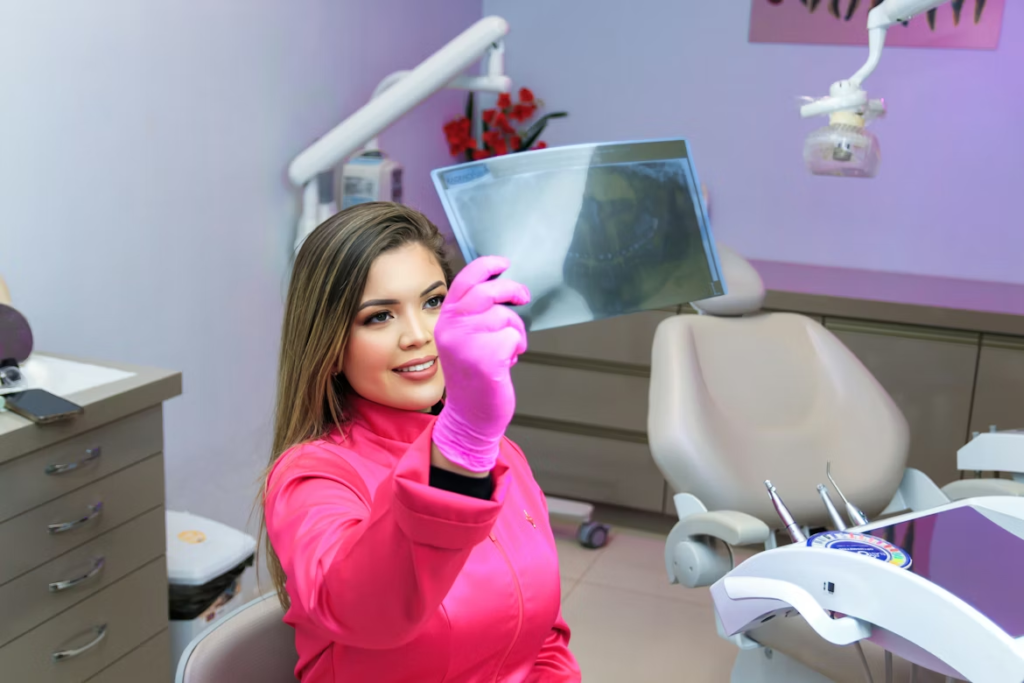
Alternative Jobs for a Foreign-Trained Dentist While She Gets Licensed
Not every Ukrainian dentist can wait years without working. Some women choose related jobs while preparing for licensing exams or additional education.
Possible roles may include:
- dental assistant;
- dental nurse, depending on the country and rules;
- dental receptionist;
- clinic coordinator;
- treatment coordinator;
- sterilization technician;
- dental lab assistant;
- patient care coordinator;
- dental interpreter;
- healthcare administrator;
- dental content writer;
- oral health educator;
- medical or dental translator;
- customer support for dental products;
- assistant in a dental supply company.
The exact options depend on local law. Some roles require short training, registration, or certificates. Others may be open to someone with dental knowledge, good language skills, and work authorization.
One boundary is very important: she should not present herself as a licensed dentist if she is not licensed in that country. She should not diagnose, treat, prescribe, or perform dental procedures that require registration.
A related job can still be valuable. It can help her earn money, improve professional language, understand the local healthcare system, and stay close to dentistry while she works toward her license.
For some women, it is a temporary bridge. For others, it becomes a different but stable career in dental healthcare.
What Her Future Husband Should Understand
If your girlfriend was a dentist in Ukraine, moving abroad can feel like losing part of herself for a while.
She may arrive in a new country with years of training and still have to start from a lower position. She may need to study again. She may see younger local graduates move faster through the system. She may feel embarrassed when people call her “not licensed yet,” even though she treated patients before.
This is where support matters.
Support does not only mean saying, “You can do it.” It may mean helping her organize documents, budgeting for exams, respecting study time, listening when she is tired, and not pressuring her to earn the same income immediately.
It also means having honest conversations. How long can the couple afford for her to study? Is she willing to go through the full licensing path? Would she accept a related dental role instead? Does she want to live in the country long enough to make the investment worth it?
These are not romantic questions, but they protect the relationship.
A man who is serious about marrying a Ukrainian dentist should understand that her career transition is not a side detail. It may shape the first several years of life together.
Conclusion
Marrying a Ukrainian dentist can mean building a life with a smart, disciplined, caring woman who has already worked hard for her profession. But if she moves abroad, her dental career will not transfer automatically.
In the USA, she may need a CODA-accredited dental degree route, often through an advanced standing program, plus state licensing. In Canada, she may need the NDEB Equivalency Process or a qualifying program, followed by certification and provincial registration. In the UK, she may need to pass the ORE and register with the GDC.
Her Ukrainian dental diploma is not worthless. Her experience is not erased. But dentistry is regulated, and every country has its own gatekeeping process.
For the couple, the best approach is honesty. Talk about the career path before marriage. Check official requirements. Prepare for costs and delays. Consider alternative dental jobs if the licensing route takes time.
A good partner does not treat her professional transition as a burden. He understands that she is trying to rebuild a serious career in a new country. With planning, patience, and respect, she can find a path that fits her new life.
FAQ
Can a Ukrainian dentist work abroad after marriage?
Yes, but not automatically as a licensed dentist. She may need document verification, credential evaluation, language proof, exams, local education, registration, or supervised practice depending on the country.
Does marriage give her the right to work as a dentist?
No. Marriage may help with immigration or residence, but it does not give her a dental license. Dentistry is regulated separately from immigration status.
Is a Ukrainian dental diploma recognized abroad?
It may be accepted as part of the licensing process, but it usually does not give direct permission to practice. The diploma may need translation, Apostille, evaluation, and review by the local dental regulator.
Can a Ukrainian dentist work in the USA?
Yes, but she will usually need to meet state licensing rules. Many foreign-trained dentists pursue an advanced standing program at a CODA-accredited U.S. dental school before applying for licensure.
Can a Ukrainian dentist work in Canada?
Yes, but graduates of non-accredited dental programs usually need to go through the NDEB Equivalency Process or a qualifying / degree completion program before certification and provincial registration.
Can a Ukrainian dentist work in the UK?
Yes, but if her qualification is not recognized for UK registration, she may need to pass the Overseas Registration Examination and apply for GDC registration before practicing.
What can she do while waiting for a dental license?
She may consider roles such as dental assistant, dental receptionist, clinic coordinator, dental interpreter, dental lab assistant, treatment coordinator, sterilization technician, healthcare administrator, or dental content writer, depending on local rules.
How long can it take to become licensed abroad?
It can take months for document preparation and related jobs, but full dental licensing may take several years. The timeline depends on the country, exams, language level, school admission, finances, and local registration rules.
What should her future husband understand?
He should understand that she may need time, money, study, emotional support, and realistic expectations. Losing the right to practice temporarily can be painful for a woman who was already a dentist in Ukraine.